Yu Garden history: Pan Yunduan's garden from 1559
The history of Yu Garden starts in 1559. That year Pan Yunduan began a private Ming-dynasty garden for his father, Pan En. The designer was Zhang Nanyang. The operator describes more than 20 years of building work, so the garden grew over a long time and we name no year of completion.
Today the garden lies in the north-east of the old town, next to the City God Temple and the Yuyuan Bazaar. For a walk through the surviving halls and rockery, see things to do in Yu Garden.

Walk the Old City with a guide
This walk goes through the Ancient City with a look at Taoist traditions, which fits the history of the area.
Hand-picked tours, booked through GetYourGuide. Prices are indicative starting prices in US dollars (as of October 2026). Tap a tour for live availability and the current price in your currency.

Old town walks with history and Taoism
A guided old-town walk that covers the history and Taoist customs of the area around the garden.
The meaning of Yu
One character, a family wish.
The character Yu is linked with peace and well-being. According to an official page updated on 13 August 2025, the name refers to the joy of ageing parents, which fits a garden built for a father.
Merchants take over in 1760
After Pan Yunduan's death in 1601 the family declined. In 1760 local merchants and notables bought the garden and renewed it.
1842 and the Small Sword uprising of 1853
In 1842, during the First Opium War, British forces occupied the area and the garden was damaged. The year does not mark the start of the war. In 1853 the Small Sword Society rose in Shanghai in the context of the Taiping period. The Dianchun Hall served as its headquarters, and after the uprising failed, the garden suffered heavy damage. The Small Sword Society and the Taiping movement should not be treated as one and the same group.
Troops in 1860
In 1860 the Qing side quartered foreign troops in the garden. Rocks and ponds were altered to make room for barracks.
Restoration from 1956 and reopening in September 1961
A comprehensive restoration began in 1956. After 5 years of work the garden opened to the public in September 1961. Current visiting rules are on the Yu Garden tickets page.
The garden after the restoration
The restored garden covers 20,000 square metres and, according to the official overview, holds more than 40 historic structures in 6 areas. It is a protected cultural monument with the AAAA tourist rating. The Great Rockery, the Jade Rock Yulinglong and the Dianchun Hall are among the sights described in official and operator texts, and our things to do page explains each one. If you want the garden as a visit rather than a story, start with the opening hours, because the day garden is closed on Mondays.
Reading the dates in order helps when you stand in front of a hall or a wall: the Ming beginning of 1559, the merchants of 1760, the damage of 1842, 1853 and 1860, and the long restoration that ended in 1961. A guide can add stories on the spot, but treat legends about where the rocks came from or how dragons were punished as tales, not as recorded events.
The tea house restoration 2023 to 2025
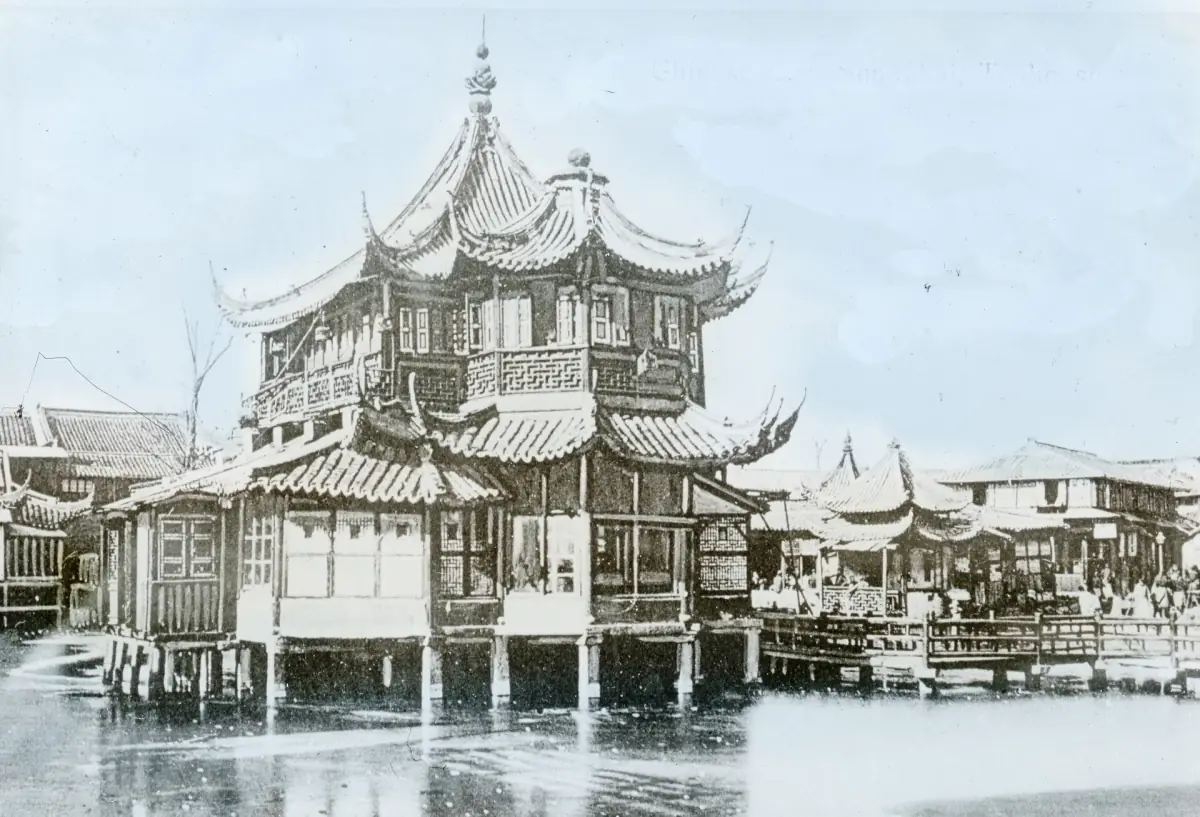
The Huxinting tea house on the pond outside the old garden gate was restored from 2023 and reopened in July 2025. For a garden visit, check the garden’s own opening notices. The pavilion was rebuilt in 1784, and it has been a commercial tea house since 1855. You can read more on the Yuyuan Bazaar page.
Yu Garden history: frequently asked questions
Who built Yu Garden?
Pan Yunduan began it in 1559 as a private garden for his father, Pan En. Zhang Nanyang was the designer.
When was the garden finished?
The operator speaks of more than 20 years of building work, so no single year is given. The start in 1559 is the fixed point.
When did Yu Garden open to the public?
In September 1961, after restoration work that began in 1956 and lasted 5 years.
Is yu-gardens.org the official website of Yu Garden?
No. This is an independent travel guide with no connection to the garden, the Yuyuan Bazaar, the City God Temple or any Shanghai tourism authority.